
Stef Craps
Ghent University
Edited Work
Publication Types:
Climate Witnessing
Introduction—Climate Witnessing: Memory, Mediation and the More-than-Human
Stef Craps, Rick Crownshaw and Rebecca Dolgoy
The Black Gold Tapestry
Sandra Sawatzky
More-than-Human Witnesses and Deep Time
Cast in Stone: Non-human Witnesses for a More-than-Human Age
Clara de Massol de Rebetz
Geologic Testimony: The Fossil as Climate Witness
Mara van Herpen
Ice Witnesses: Exploring the Natural-Cultural Memory of Climate Change in Susan Schuppli’s Learning from Ice
Simon Probst and Gabriele Dürbeck
The Temporality of Climate Witnessing: Ice, Simulation, Image
Piotr M. Szpunar
Affective Archives and Situated Perspectives
Witnessing Otherwise: Storied Matter, Affect and Climate Change
Katarzyna Więckowska
“Vanishing Points”: Climate Witnessing at the End of the Earth
Lucy Bond and Jessica Rapson
Museums and the Politics of Climate Memory
Museums and the Implicit Anthropocene: Witnessing in the Science Museum’s Energy Hall
Rick Crownshaw
Museum Visitors as Witnesses of Climate Change: Experiencing the Past, Present and Future of the Environmental Crisis in Exhibitions
Sophie Decroupet
Climate Witnessing in Canada’s National Science and Technology Collection
Casey Gray, Rebecca Dolgoy, Peter Hodgins and Barbara Leckie
The Seedling: Transforming Climate through Art and Awi’nakola
Andrew Ambers, Carey Newman and Jeremy Mendes

Traag geweld: Kan kunst het klimaat redden?
Inleiding: Traag geweld: Kan kunst het klimaat redden?
Stef Craps en Mahlu Mertens
Gesprek met Nic Balthazar: “De verzoenbaarheid van kunst en activisme”
Stef Craps en Mahlu Mertens
Gesprek met Moya De Feyter: “Hoop is gewoon hard werken”
Stef Craps en Mahlu Mertens
Gesprek met Alexander Devriendt: “Het onmogelijke mogelijk maken”
Stef Craps en Mahlu Mertens
Gesprek met Christel Stalpaert: “De slagkracht van de verbindingsstreepjes”
Stef Craps en Mahlu Mertens

Ecological Grief
Introduction
Introduction: Ecological Grief
Stef Craps
Theorizations
Negating Solastalgia: An Emotional Revolution from the Anthropocene to the Symbiocene
Glenn A. Albrecht
“You can never replace the caribou”: Inuit Experiences of Ecological Grief from Caribou Declines
Ashlee Cunsolo, David Borish, Sherilee L. Harper, Jamie Snook, Inez Shiwak, Michele Wood, and the HERD Caribou Project Steering Committee
Ecological Grief and Anthropocene Horror
Timothy Clark
Is Climate-Related Pre-Traumatic Stress Syndrome a Real Condition?
E. Ann Kaplan
Planet Earth: Crumbling Metaphysical Illusion
Robert D. Stolorow
Mediations
Grief as a Doorway to Love: An Interview with Chris Jordan
Stef Craps and Ida Marie Olsen
There Is Grief of a Tree
Paul K. Saint-Amour
Anthropocenic Affects and Ethics in Aaron Thier’s Mr. Eternity
Mahlu Mertens
“His sickness was only part of something larger”: Slow Trauma and Climate Change in Leslie Marmon Silko’s Ceremony
Martin Premoli
Petromelancholia and the Energopolitical Violence of Settler Colonialism in Waubgeshig Rice’s Moon of the Crusted Snow
Reuben Martens
Review Essays
Review of Earth Emotions: New Words for a New World by Glenn A. Albrecht
Ben De Bruyn
Review of Affective Ecocriticism: Emotion, Embodiment, Environment, edited by Kyle Bladow and Jennifer Ladino
Shannon Lambert
Review of Mourning Nature: Hope at the Heart of Ecological Loss and Grief, edited by Ashlee Cunsolo and Karen Landman
Rick Crownshaw
Contributors
Decolonizing English Literature
Introduction: Decolonizing English Literature
Stef Craps
Ankhi Mukherjee
Dévoiler les ténèbres de Conrad: à propos de l’oeuvre spectrale de Michael Matthys
Une interview par Véronique Bragard
Decolonizing the Cli-Fi Corpus
Mahlu Mertens and Gry Ulstein
“A Sense of Being the Foreign-”: Unlearning Western Privilege in J. T. Rogers’s The Overwhelming
Laura Michiels
The Rising Tide of Climate Change Fiction
Introduction: The Rising Tide of Climate Change Fiction
Stef Craps and Rick Crownshaw
Beauty That Must Die: Station Eleven, Climate Change Fiction, and the Life of Form
Pieter Vermeulen
The Rest Is Silence: Postmodern and Postcolonial Possibilities in Climate Change Fiction
Adeline Johns-Putra
The Hot War: Climate, Security, Fiction
Ben De Bruyn
Tearing Down the Greenhouse: Visual Ecology, Savvy Critics, and Climate Change in T. C. Boyle’s The Terranauts
River Ramuglia
From the Grotesque to Nuclear-Age Precedents: The Modes and Meanings of Cli-fi Humor
Courtney Traub
The Novel after Nature, Nature after the Novel: Richard Jefferies’s Anthropocene Romance
Jesse Oak Taylor
Contemporary Fiction vs. the Challenge of Imagining the Timescale of Climate Change
Mahlu Mertens and Stef Craps
Cli-fi, Petroculture, and the Environmental Humanities: An Interview with Stephanie LeMenager
River Ramuglia
Contributors
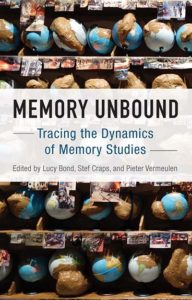
Memory Unbound: Tracing the Dynamics of Memory Studies
What unites much of the most exciting research going on in the field of memory studies today is a tendency to regard memory not as fixed but as fluid, not as static but as dynamic, not as bound but as unbound. Memory is increasingly being studied as something that does not stay put but circulates, migrates, travels; it is more and more being conceptualized as a process, as work that is continually in progress, rather than as a reified object. Memory Unbound is the first book to systematically explore the four most important dimensions of the mobility of memory: its transcultural, transgenerational, transmedial, and transdisciplinary drift. While these dimensions have been treated separately to a greater or lesser extent in a number of publications, this collection considers them comprehensively and in an integrated manner. Bringing together many of the leading scholars of memory with emerging voices in the field, Memory Unbound transforms our current knowledge of the movements of memory across cultures, generations, media, and disciplines and sets an ambitious agenda for the future of memory studies.
Endorsements and reviews:
Memory Unbound is exemplary of the research and writing of the “third wave” of memory studies. It heralds a new departure in keeping with the transforming effects of new technologies of communication, and conveys the energy and excitement attending the precipitous emergence and rapid development of this new realm of scholarship.
Patrick Hutton, University of Vermont
This is a great book – provocative, timely, and thoughtful. It proposes a future for memory research that finds a place for new investigators to embed their ideas.
Joanne Garde-Hansen, University of Warwick
The volume provides a comprehensive examination of the field of memory studies, from a range of disciplines and approaches and using global case studies. The dynamic compilation of essays is attentive to shifts in the field towards interdisciplinarity and provides a nuanced account of the dynamics of memory across various contexts. . . . This volume of essays is a significant contribution to the field as it provides a critical understanding of memory across media and disciplines, and will be of interest to a wide range of scholars working in the field of memory studies.
Tanja Bosch, Memory Studies (12.1 (2019): 98-101)
Memory Unbound is an outstanding volume of essays that represents an indispensable reference point for all scholars of memory studies. It brings together the very latest in memory studies scholarship from a diverse range of perspectives that together showcase the ways in which the field can and should traverse borders of various kinds. The twelve essays and introduction that constitute this volume are immaculately edited and well written, and combine theory and practice in exemplary ways.
Sara Jones, Témoigner: Entre histoire et mémoire (126 (Apr. 2018): 156-58)
Contents:
Introduction. Memory on the Move
Lucy Bond, Stef Craps, and Pieter Vermeulen
Chapter 1. Staging Shared Memory: Je Veux voir and L’Empreinte de l’ange
Max Silverman
Chapter 2. Remembering the Indonesian Killings: The Act of Killing and the Global Memory Imperative
Rosanne Kennedy
Chapter 3.Transnational Memory and the Construction of History through Mass Media
Aleida Assmann
Chapter 4. Small Acts of Repair: The Unclaimed Legacy of the Romanian Holocaust
Marianne Hirsch and Leo Spitzer
Chapter 5. Fictions of Generational Memory: Caryl Phillips’s In the Falling Snow and Black British Writing in Times of Mnemonic Transition
Astrid Erll
Chapter 6. The Uses of Facebook for Examining Collective Memory: The Emergence of Nasser Facebook Pages in Egypt
Joyce van de Bildt
Chapter 7. Connective Memory: How Facebook Takes Charge of Your Past
José van Dijck
Chapter 8. Embodiments of Memory: Toward an Existential Approach to the Culture of Connectivity
Amanda Lagerkvist
Chapter 9. Metaphorical Memories of the Medieval Crusades after 9/11
Brian Johnsrud
Chapter 10. The Agency of Memory Objects: Tracing Memories of Soweto at Regina Mundi Church
Frauke Wiegand
Chapter 11. Cultural Memory Studies in the Epoch of the Anthropocene
Richard Crownshaw
Chapter 12. “Filled with Words”: Modeling the September 11 Digital Archive and the Utility of Digital Methods in the Study of Memory
Jessica K. Young
Bibliography
Index
Transcultural Negotiations of Holocaust Memory
Introduction: Transcultural Negotiations of Holocaust Memory
Stef Craps and Michael Rothberg
From Gaza to Warsaw: Mapping Multidirectional Memory
Michael Rothberg
Video Testimony, Modernity, and the Claims of Melancholia
Pieter Vermeulen
Traumatic Mirrorings: Holocaust and Colonial Trauma in Michael Chabon’s The Final Solution
Stef Craps and Gert Buelens
The Holocaust as a Paradigm for the Congo Atrocities: Adam Hochschild’s King Leopold’s Ghost
Sarah De Mul
International Human Rights and the Politics of Memory: Limits and Challenges
Andreas Huyssen
Between the Local and the Global
Max Silverman
Memory’s Future
A. Dirk Moses
The Holocaust: An ”Engorged” Symbol of Evil?
Brett Ashley Kaplan
Postcolonial Trauma Novels
Introduction: Postcolonial Trauma Novels
Stef Craps and Gert Buelens
Journeying through Hell: Wole Soyinka, Trauma, and Postcolonial Nigeria
Anne Whitehead
Who Speaks? Who Listens?: The Problem of Address in Two Nigerian Trauma Novels
Amy Novak
The Curse of Constant Remembrance: The Belated Trauma of the Slave Trade in Ayi Kwei Armah’s Fragments
Laura Murphy
“You would not add to my suffering if you knew what I have seen”: Holocaust Testimony and Contemporary African Trauma Literature
Robert Eaglestone
Mortgaged Futures: Trauma, Subjectivity, and the Legacies of Colonialism in Tsitsi Dangarembga’s The Book of Not
Rosanne Kennedy
Apartheid Haunts: Postcolonial Trauma in Lisa Fugard’s Skinner’s Drift
Mairi Emma Neeves
“This text deletes itself”: Traumatic Memory and Space-Time in Zoë Wicomb’s David’s Story
Shane Graham
The Past in the Present: Personal and Collective Trauma in Achmat Dangor’s Bitter Fruit
Ana Miller
The Heterotopic Spaces of Postcolonial Trauma in Michael Ondaatje’s Anil’s Ghost
Victoria Burrows
“You your best thing, Sethe”: Trauma’s Narcissism
Petar Ramadanovic
Stef Craps
The Trans/Historicity of Trauma in Jeannette Armstrong’s Slash and Sherman Alexie’s Indian Killer
Nancy Van Styvendale
Decolonizing Trauma Studies: A Response
Michael Rothberg
Notes on Contributors